Why a Clear Invitation Makes Joining Easier
A clear invitation makes joining easier by explaining who is welcome, what will happen and whether a reply is needed, without making attendance feel compulsory.
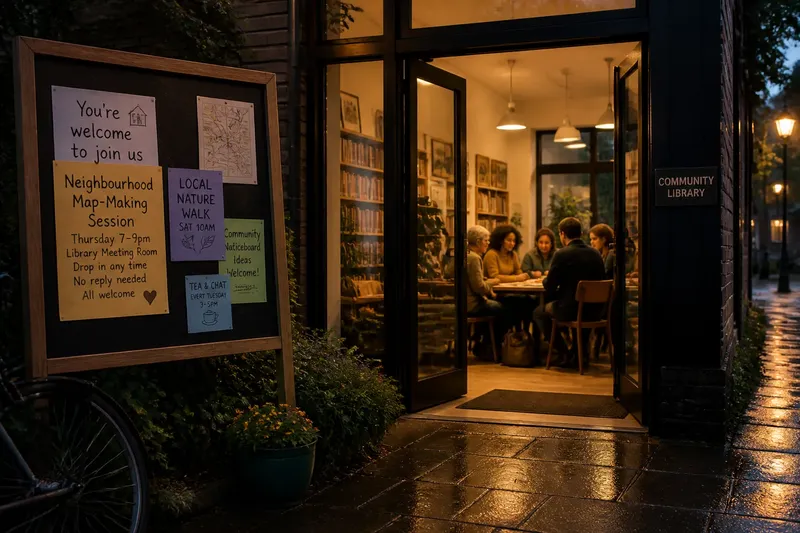
A clear invitation makes joining easier because people can decide what they are agreeing to before they leave home. “Come by on Thursday” leaves practical questions hanging; “Drop in at the library meeting room on Thursday for a short neighbourhood map-making session; come for any part, and no reply is needed” answers several of them without turning an ordinary gathering into a formal summons.
When an invitation gets little response, the problem is not necessarily a lack of interest. People may be unsure whether they are included, what the activity involves, or whether silence will be taken as a refusal. Those are separate snags, and each calls for a different clarification. The aim is not to persuade everyone. It is to make the choice legible.
When people cannot tell if the invitation includes them
A message sent to “the usual crowd” works only if everyone knows who that means. Someone new to the street, a neighbour who has missed recent gatherings, or a person who does not belong to the organising group may reasonably assume the invitation is for someone else.
The cause is often shorthand. Organisers know the circle in their own minds and forget that others cannot see its edges. Phrases such as “residents”, “families” or “the group” can also sound narrower than intended. A parent may wonder whether children are included; a renter may wonder whether “residents” means owners.
Say who is welcome in ordinary terms, then name any real limit. “Anyone living nearby is welcome, including children” is clearer than “all are welcome” if the gathering is specifically local. If attendance is limited to members of a particular association, say so plainly and explain how a neighbour can find out about joining. An invitation should not imply an open door and then rely on someone to discover an unspoken rule at the threshold.
For a small gathering with limited space, give a simple way to ask before travelling. Avoid implying that a person must know an organiser personally to be considered. The useful test is whether someone outside the planning conversation can tell, from the message alone, that the invitation applies to them.
When the activity sounds more demanding than it is
“Community clean-up” can suggest a full morning of heavy work. “Neighbourhood get-together” can mean anything from a brief chat to a packed programme. If the activity is unfamiliar or the wording broad, a cautious reader has to imagine the most demanding version and decide whether to risk it.
Describe what people will actually do, in plain language. Include the kind of participation expected and any useful practical detail: whether it is fine to watch first, whether people can arrive partway through, and whether they need to bring something. A short description is usually more reassuring than a string of upbeat adjectives, which tend to clarify the organiser’s mood rather than the event.
Say you are inviting neighbours to make labels for a shared noticeboard. “We’ll spend some time writing and arranging labels for the noticeboard; you can suggest wording, help make them, or simply have a look” gives a newcomer a picture of the activity and a low-pressure way to take part. The expected result is not that everyone attends; it is that a recipient can judge whether the event suits them.
Be candid about the setting and pace where they matter. If the room is likely to be busy, say so. If the activity is mostly seated, mention that. These details help people make their own decisions and avoid the awkward business of arriving with a different idea of what they signed up for.
When the invitation leaves practical questions unanswered
A person may want to come and still be unable to work out where to go, when to arrive, or how long to stay. “At the hall this weekend” is not a usable location or time. Even a familiar venue can have several doors, rooms or entrances, each apparently designed to test local knowledge.
Give the day, start time and a recognisable location. Add the room or entrance when the venue needs it. If people may arrive late or leave early, say whether that is acceptable. If the event has a definite finish, include it; if it is an informal drop-in, give a reasonable sense of the window rather than implying that guests should be prepared to linger indefinitely.
Think through the recipient’s route from reading the message to finding the activity. A community centre may be familiar as a building but less obvious after hours, when its usual entrance is closed. A brief note about the correct entrance can remove that uncertainty without padding the invitation with directions everyone already knows.
Share only details that help someone decide or arrive. A long account of the planning, a list of every possible contingency and several conflicting contact routes can bury the useful information. Put the essential facts where a reader can spot them quickly, then add a contact option for a question that the message cannot anticipate.
When people think they must reply or commit
Some invitations accidentally make attendance sound like a promise. “Let me know if you’re coming” can be a genuine request for numbers, but without context a recipient may not know whether a definite answer is required. They may delay replying until certain, then miss the event altogether.
State what kind of reply you need, and why. If the organiser needs to arrange a room or prepare materials, ask for a response by a clear point. If no count is needed, say that no reply is necessary. If a person can decide on the day, say so. These distinctions help people avoid both needless messages and the feeling that they have accepted a social obligation.
When attendance requires a booking or there is a capacity limit, explain that in the invitation and make the next action clear. Do not ask for a response and then leave recipients guessing whether a short message, a form or a conversation with an organiser is expected. Where the answer depends on a venue’s rules or a particular group’s arrangements, give the relevant detail once and keep it consistent across the invitation and any follow-up.
Keep the tone neutral. “You’re welcome to come if it suits you” leaves room for a genuine choice; repeated follow-ups asking whether someone is sure can turn an invitation into a small administrative pursuit. A polite reminder may be useful when a reply is needed, but it should explain the practical reason rather than imply that attendance is a test of neighbourliness.
When the invitation feels like a private conversation
A message can include the right details and still sound as though it was meant for a handful of friends. Familiar jokes, unexplained acronyms and references to previous gatherings can make newcomers feel they have missed the first chapter. They have, in fact, missed the first chapter; the useful question is whether the invitation lets them join the next one.
Replace insider shorthand with a brief explanation. Name the activity rather than referring to “our usual thing”. If there is background a newcomer genuinely needs, add one sentence. Do not make the invitation a recap of the group’s history, which is an efficient way to make a simple gathering sound like an institution with minutes.
Use direct, welcoming language without promising that everyone will instantly feel at home. “You can come on your own” may be helpful when recipients might expect to bring a companion. “You do not need to know anyone beforehand” can answer a real concern. But a list of assurances can draw attention to worries that did not occur to the reader, so choose details that fit the actual event.
What should a clear invitation answer?
Who should the invitation include?
Name the intended audience in terms a recipient can recognise, such as people living on a particular street or anyone using a shared local space. Mention meaningful limits, including age or membership requirements, rather than leaving people to infer them.
How much detail about the activity is enough?
Explain what people will do and whether watching, arriving late or leaving early is acceptable. Add practical details that affect someone’s decision, and leave out the organiser’s full planning history.
Should everyone be asked to reply?
Ask for a reply only when it serves a clear purpose, such as arranging access or preparing for attendance. Say what response is needed and by when; if people can simply turn up, make that clear.
How can an invitation stay low-pressure?
Make the choice explicit without repeatedly chasing a response or attaching moral weight to attendance. “Come if it suits you; no reply needed” is direct, provided it accurately describes the arrangements.
Check the invitation from the recipient’s side
Before sending a message, read it as someone who has not helped plan the gathering. Can they tell whether they are welcome, what they will encounter, where and when to go, and whether they must respond? If one answer depends on knowing the organiser, add the missing detail rather than assuming a friendly recipient will ask.
Imagine a neighbour receives a note saying, “We’re meeting at the centre on Friday to work on the shared noticeboard; drop in whenever, and no reply is needed.” They ask which room the group will use. The organiser adds the room name and the correct entrance, then sends the revised detail to everyone who received the original. The observable change is simple: recipients have enough information to find the activity without needing a personal introduction or a further exchange.
For a clear invitation, the useful test is not whether it sounds polished. It is whether a person can make an informed choice without having to decode the organiser’s intentions. Include the facts that remove genuine uncertainty, leave attendance voluntary, and let the invitation do its modest job: open a door that people can choose to walk through.