The Icebreaker That Turns into an Interview
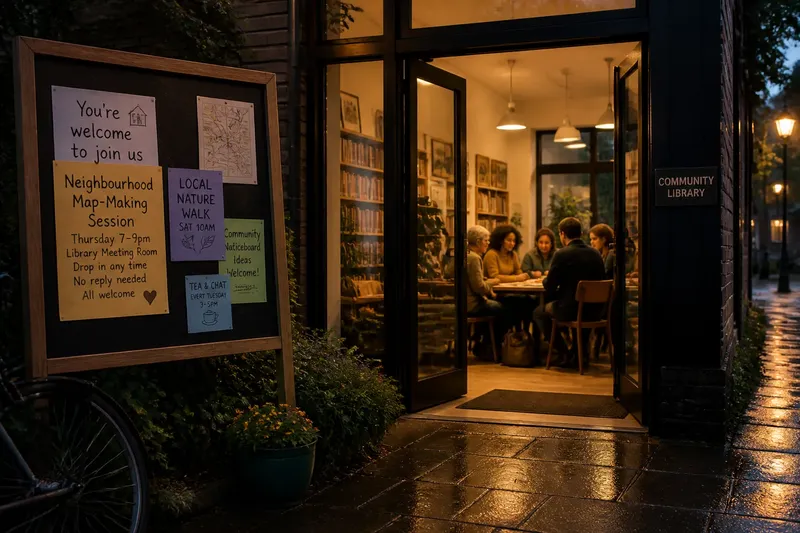
A neighbourhood icebreaker can start a useful exchange without putting anyone on the spot. Choose a shared local topic and make participation genuinely optional.
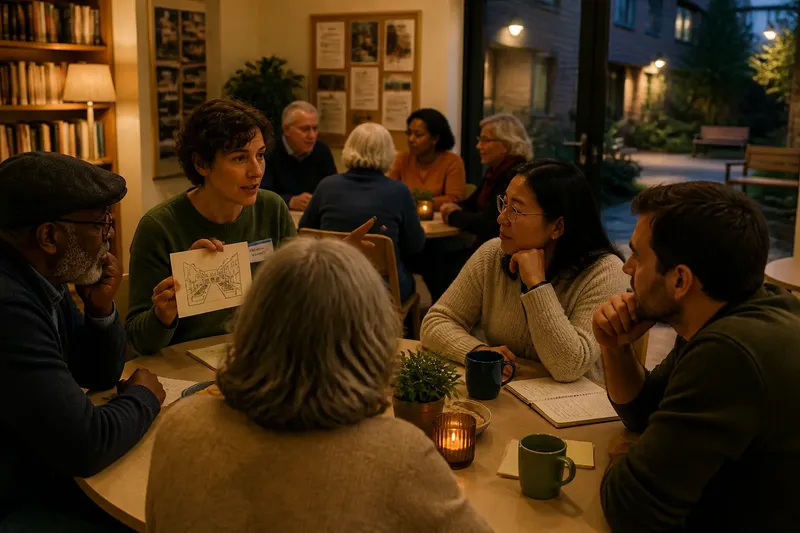
A neighbourhood icebreaker works better when it gives people a shared subject than when it asks each person to explain themselves. At a residents’ meeting, “Which local service is hardest to find?” can start a practical exchange; a turn-by-turn request for names, jobs and addresses can make the room feel like a reception desk.
Imagine a clearly hypothetical situation: Rowan is organising a welcome evening in a community room beside a library. The planned activity is a set of paired conversation cards, but Rowan notices that several neighbours have come to ask about the shared courtyard, not to trade personal histories. The cards can be changed to invite discussion about common spaces and local routines.
Personal questions can make an icebreaker feel like an interview
Questions about work, family or how long someone has lived nearby are not automatically intrusive. In a group of relative strangers, though, asking them in sequence can make each answer feel like an audition. People may have to decide how much to disclose before they have found a comfortable way to join the gathering.
A shared topic changes the shape of the exchange. Instead of directing attention from one person to the next, it lets neighbours respond to an idea, ask a follow-up or offer a different view. The host does not need to make everyone speak for conversation to begin.
Choose a prompt tied to a place or shared task
A useful prompt is concrete, easy to answer at different levels and not dependent on money, travel or a particular household arrangement. It can focus on a local place, an everyday service, a shared-space decision or a small practical discovery.
- Notice: If people mention that the courtyard entrance is difficult to spot, ask whether a clearer sign would help; if the entrance is already obvious, invite suggestions for another shared-space improvement.
- Noise: If neighbours raise evening noise, ask what shared quiet-hour arrangement might be workable; if noise is not a concern, move on rather than inventing a dispute.
- Local information: If people cannot find reliable noticeboard updates, ask where a shared paper noticeboard should go; if they already use one, discuss what information belongs there.
- Access: If someone says a meeting room is hard to reach, ask which practical change would make access clearer; if access is working well, consider what would help first-time visitors find the room.
- Shared activities: If neighbours favour an activity that needs little equipment, ask what would make it easy to join; if suggestions require supplies or bookings, check who would organise those before proposing a date.
- Everyday help: If people describe a useful local service, ask how newcomers can find it; if no service comes to mind, offer the library or council information board as a subject instead of pressing for an answer.
These prompts are options, not a sequence to run through. Pick one that suits the purpose of the gathering, put it on a card or say it once, and let the discussion develop. A stack of cards with instructions and voting rules is still an activity; it has merely acquired stationery.
Make the invitation optional in practice
Say plainly that people can answer, listen, ask a question or talk about something else. Then behave as if you mean it: do not call on neighbours in order, keep a clipboard of responses or treat a pause as a problem that must be solved immediately.
Place a prompt card where people can read it without having to approach the host. Join the conversation yourself with a short, relevant contribution, then leave space for others. If the topic does not catch, change it gently or let smaller conversations form.
How do you choose and use a neighbourhood icebreaker?
What makes a neighbourhood icebreaker easy to answer?
Choose a specific subject people can approach from different angles, such as a shared entrance or local noticeboard. Avoid questions that require a personal disclosure or a polished story.
Should the host ask everyone to take a turn?
No. Offer the prompt to the room and let people decide whether to respond. A compulsory round recreates the pressure the shared subject is meant to avoid.
What should you do if the room goes quiet?
Wait briefly, add a small observation of your own or move to another subject. Do not respond by asking a more personal question simply to fill the gap.
Can a prompt lead to a decision about shared space?
Yes, if the gathering is meant to discuss a practical issue and the host makes clear what can be decided there. For matters involving building rules, access or safety, check with the relevant manager or qualified professional rather than treating an informal conversation as authority.
A worked example keeps the prompt practical
Imagine, in this invented situation, that Rowan has three blank cards and a residents’ meeting about the shared courtyard. Rowan writes one question on a card: “What would make the courtyard easier to use?” At the meeting, one neighbour says the entrance is hard to spot; another says a sign would help, while someone else points out that a sign alone would not help visitors who cannot use the steps.
Rowan writes down the two distinct issues rather than asking the group to settle both at once. The immediate answer is that visibility and access need separate follow-up: the residents can discuss wording and placement for a sign, while the building manager should be asked about access options. The trade-off is clear. A simple sign may help visitors locate the entrance, but it does not address the steps; the group has found a useful next question without pretending one small change solves everything.
Let a useful exchange be enough
The host can help by introducing neighbours who have raised the same subject, pointing out where local information is displayed or moving chairs so people can hear one another. There is no need to turn every exchange into a formal introduction or every conversation into a decision.
A neighbourhood icebreaker is doing its job when it offers a low-pressure route into a shared subject. Choose a local topic, explain that participation is optional and follow practical questions to the right person. The room need not produce a unanimous view; a clearer next step is often plenty.