A Living Room Ready for a Quiet Drop-In
A quiet drop-in living room makes it clear where to go, what is happening and how to leave, helping neighbours settle in without a formal programme.
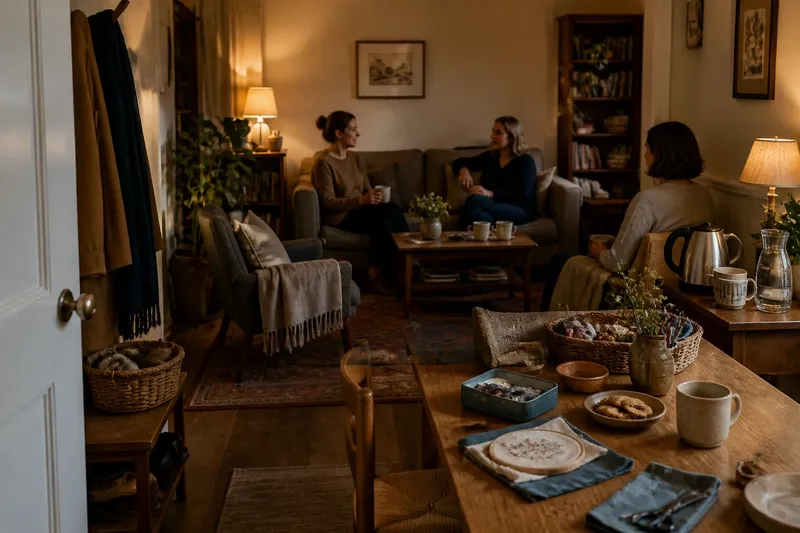
A quiet drop-in living room works best when the route from the front door to a seat is obvious. Guests may arrive at different times, so the room should make it easy to settle without stopping an existing conversation or being recruited into an activity on arrival.
The layout can do much of that work. A clear place for coats, a few seats set apart from the activity and refreshments within reach let people choose how to spend their visit. The activity is one option, not a measure of how sociable anyone is feeling.
Give the invitation a clear arrival window
An open house still needs boundaries. Give neighbours a start and finish time, and say that they are welcome to drop in for part of it. Choose a window that fits your own energy and the likely rhythm of the household.
A useful invitation might read, “The front room will be open on Sunday afternoon; come by any time between the stated hours for tea and a bit of mending.” It offers a reason to visit without implying that guests must stay until the end or follow a programme.
Think through the practical details before sending it. Say whether guests should knock, where to find the room and whether anything might affect their visit, such as a lively dog or a narrow shared entrance. A short, useful note beats a surprise involving a barking terrier.
Keep the window manageable. A drop-in is easier to host if you are not also cooking a meal or trying to finish a work call. The aim is to make a room available, not to put the host on continuous duty.
Make the entrance and seating easy to read
Clear the route from the door to the room. Move shoes, bags and stray furniture out of the way, then make the first useful destination clear: a chair, a side table or a place for a coat. Someone arriving during a conversation should not have to cross the room wondering where to put things.
Arrange seats in small groups rather than forming a single ring that waits for everyone. A sofa and two chairs can serve a conversation, while a separate chair offers a quieter place to sit. Leave enough room for people to join or move away without requiring a formal reshuffle.
Set out activity materials on a coffee table or cleared dining table, but leave space for people who prefer to talk or watch. Keep the room’s everyday character, too. Move fragile ornaments if they make you anxious, but there is no need to turn a living room into a venue with domestic lighting.
Say you are hosting a mending afternoon. You clear a path from the door, put a sewing tin and spare buttons at one end of the table, and leave the other end free for mugs. A neighbour arriving midway can take a seat, join the conversation or pick up a needle. None of those choices needs to pause the room.
Choose an activity that can be joined or ignored
Good drop-in activities are easy to understand by looking at them and do not depend on a fixed order. Mending, sketching a familiar street, sorting books or assembling a simple seasonal display can work because each person can make a small contribution without waiting for someone else.
Put out only the materials needed to begin: perhaps thread, needles and scissors, or paper and pencils. Keep shared tools within reach. If materials could stain or shed, use a forgiving surface and make any relevant care details clear.
Offer the activity in a matter-of-fact way: “There’s paper and charcoal on the table if you fancy drawing.” Then leave the choice alone. Some guests will take part; others may prefer a seat and a conversation. The room should accommodate both without treating either as a verdict on the gathering.
Keep refreshments and conversation low-effort
A kettle, tea, coffee, water and a small plate of biscuits may be enough. Put cups and napkins where guests can serve themselves, away from the activity materials. That way, you can answer the door without repeatedly stopping to pour drinks.
When someone arrives, greet them and introduce them to nearby guests if you know their names. A brief explanation of what is on the table can help; a full recap of the afternoon is rarely required. Leave some quiet in the room, too. Music should not compete with conversation, and a small room rarely needs several activities at once.
What should the invitation and room make clear?
Do guests need to bring anything?
Say plainly if they need nothing, or name one optional item that would be useful. For mending, a guest might bring a garment, but spare materials should be available so arriving empty-handed is no obstacle.
How can someone leave without awkwardness?
Say that guests are welcome to stay briefly, and keep the exit route clear. If someone says they are going, a warm goodbye is enough; they do not owe an account of their schedule.
What if nobody arrives at the start?
Begin the activity or make yourself a cup of tea. Keep the room ready for later arrivals rather than treating a quiet beginning as a verdict on the invitation.
How can someone join without doing the activity?
Keep seats outside the working area and make conversation a complete option. A guest can meet neighbours without drawing, sewing or sorting anything.
Use a few quiet cues instead of a room full of signs
People may hesitate if they cannot tell where coats go, whether cups are for sharing or whether the activity is open to them. A clear coat spot, cups beside the kettle and visible materials answer those questions without a speech.
Use a handwritten note only where a choice is genuinely unclear, such as marking a shelf for clean cups. Too many signs can make a neighbourly visit feel like a carefully managed exhibition, where even the biscuits appear to have been briefed.
Afterwards, notice what the arrangement made easy and what caused a pause. If coats ended up on the spare chair, move the coat spot next time. If mugs crowded the drawing materials, separate those surfaces. The useful adjustment is often a small one: a quiet drop-in living room should let guests see where they can sit, what they may choose to do and how to leave, without asking the host to choreograph every movement.